Branded Content

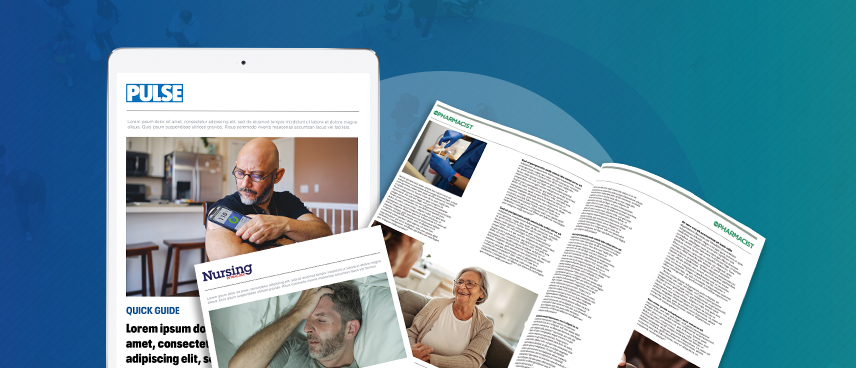
Across our media brands, clients can collaborate with our trusted editorial team to craft high-quality, compelling articles that align with their brand’s message.

Branded content pieces are designed to inform and engage your target healthcare audience, while reflecting the client’s core messaging and areas of expertise.

The partnership allows clients the flexibility to select topics that support their strategic objectives, while leveraging one of our media brand’s editorial tone, credibility, and audience reach.

Our editorial team worked closely with the client to shape each article’s narrative, ensuring the content is authentic, informative, and engaging – not promotional. Once published as an editorial feature, each article is promoted across our channels – online and via newsletters – offering access to a highly engaged and loyal readership.

Branded content is ideal for thought leadership, product storytelling, or positioning your brand around key themes in a way that feels organic and value-driven to readers.

Covering primary and secondary care markets, our portfolio of market-leading brands reach unrivalled numbers of HCPs. We listen to what they tell us and take notice of what they respond to, allowing us to communicate effectively with your target audience.

Explore our recent case study showcasing how the Medical Defense Society partnered with Pulse to deliver a Branded Content piece that highlights their expertise and deep understanding of the challenges faced by GPs today.

This new offering is available via Pulse, Pulse PCNNursing in Practice, The PharmacistManagement in PracticeHealthcare LeaderHospital Pharmacy Europe, and Hospital Healthcare Europe. For more information about branded content pieces, please contact us today.

Pulse Portfolio Careers

Pulse has launched a new series on portfolio careers, covering the whole spectrum, from an expedition doctor to a sports medic, from a prison GP to a CQC advisor.

It will feature a (tongue-in-cheek) quiz, asking respondents whether they are public minded, whether they are bothered about being liked by peers, whether they want to travel around the world and whether they genuinely want to spend more time with patients.

There are 16 possible pathways, and each ends up on a different careers page. These will detail what qualifications are necessary for that particular role, the expected pay, the amount of hours that need to be committed and the positives and negatives of the role.

This Portfolio Careers series has been sponsored by the MDDUS, who provide details around the medico-legal aspects of every role.

It launches today, along with the new Pulse Careers platform, which is targeted at GP trainees, newly-qualified GPs and those considering the next stages of their career.

The platform provide all the essential news around jobs and recruitment, as well as analysis and advice, columns from experts and those who have stories to tell around their own career paths.

It will also feature special reports and series similar to the Portfolio Quiz, which will help GPs to consider the next stages of their careers. These will include looking at life as a GP overseas, what international medical graduates need to know about working in the UK and a guide to embarking on a successful locum career. We are also hoping to launch webinars to help GPs find jobs, or provide advice on the options open.

There will be a fortnightly newsletter, with the highlights from the previous two weeks on Pulse Careers.

This follows the successful launch of a white paper on the recruitment and unemployment crisis by Cogora, the publishers of Pulse, which examined the reasons why GPs are struggling to find work at the same time as practices are understaffed. You can find all of Pulse’s coverage here.

If you are interested in finding out more about Pulse Careers sponsorship opportunities, please get in touch with us today.

Pulse in Focus Podcast: What does the NHS 10-year plan hold in store for GPs? And are digital rectal exams a thing of the past?

Our latest instalment of Pulse in Focus: The Podcast for GPs is out now and includes a discussion on the Government’s 10-year health plan.

Pulse deputy news editor Anna Colivicchi discusses the Government’s 10-year health plan with features assistant Maya Dhillon. The pair delve into the plan’s aims to reform the NHS and how this will impact general practice.

They are joined by several guests giving their takes on the 10-year plan. Following her widely-shared editorial, editor Sofia Lind argues that the plan’s introductions of two new contracts signals the end for small practices.

Professor Azeem Majeed, head of the department of Primary Care and Public Health at Imperial College London, and Dr Steve Taylor, GP spokesperson for the Doctors’ Association UK, also question the plan’s aims and point out the challenges it might present.

Anna also gives a preview of her brand new miniseries analysing how the 10-year plan will impact the new 2028 GMS contract.

In our clinical section, we are joined again by Pulse editorial adviser and GP Dr Keith Hopcroft. This time, he dissects a recent claim from urologists that GPs no longer need to do a digital rectal exam to test for prostate cancer. He looks at where this has come from, the facts behind it, and what it means for GPs.

Pulse in Focus: The Podcast for GPs is hosted on Buzzsprout but is available wherever you get your podcasts.

Pulse provides an indispensable and comprehensive range of trusted content that meets the needs of all GPs, through its political and financial news, cutting-edge investigations, clinical updates or practical business advice. Last month, the podcast included an interview with Professor Gillian Leng – leader of the Government-commissioned review into PAs – at Pulse LIVE Birmingham.

Pulse and Management in Practice in the Press: GP practice collective action

Our exclusive survey carried out by Pulse and Management in Practice has been picked up by the national press, revealing that more than four in 10 GP practices are limiting patient appointments as part of collective action to bring about better terms and conditions.

In the survey carried out by Pulse and Management in Practice, we received responses from 660 different GP practices – about one in 10 in England.

The survey revealed that almost three quarters of England’s GPs (70%) are currently taking some form of collective action.

Only 7% said they are not planning on taking part, and 13% are currently still considering which of the BMA-recommended actions they are willing to take.

The survey showed that one of the most common actions taken by practices is limiting appointments per GP, with 41% of practices already having this measure in place, and 29% currently considering implementing it.

A GP partner who wishes to remain anonymous told us that his practice in Huntingdonshire is looking to intensify its action, after having already served notice of voluntary services and stopped rationing referrals.

He said: ‘If the Government does nothing, we may intensify our action. Wes Streeting does not understand how strongly grassroots doctors feel about this. We are looking to intensify our action as the Government appear not to understand our resolve on this issue.’

The survey results from Pulse and Management in Practice were picked up by the Telegraph, the Standard, Daily Mail, Express & Star, and ITV News.

Pulse provides an indispensable and comprehensive range of trusted content that meets the needs of all GPs, through its political and financial news, cutting-edge investigations, clinical updates or practical business advice.

Management in Practice offers the latest incisive news, features, opinions, and business insight, gathered specifically for practice managers, GPs and those with management responsibilities working in GP surgeries.